
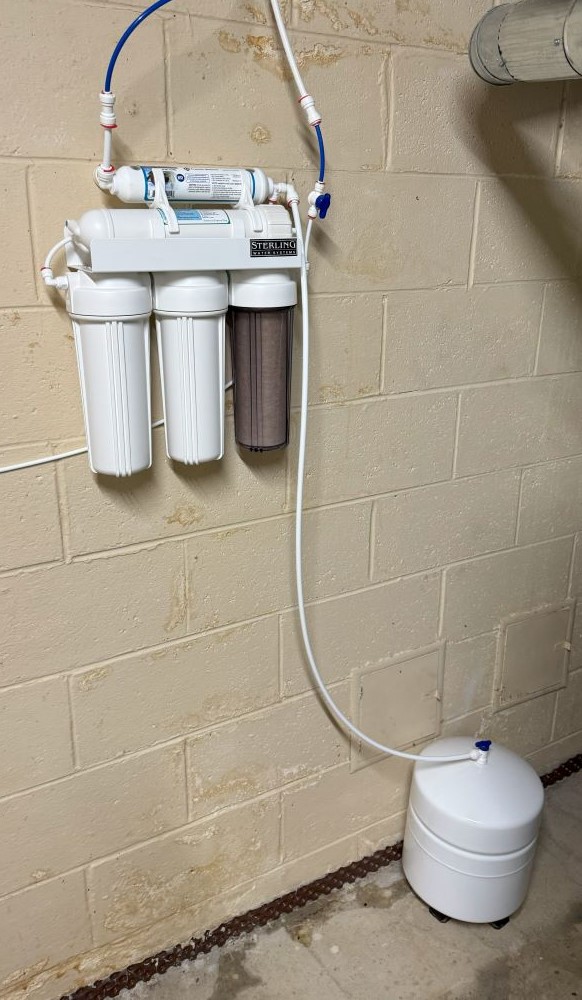
Reverse Osmosis System
Oxford Water Conditioning
Reverse Osmosis for Dedicated Drinking Water
Target Dissolved Solids at the Kitchen Tap
Reverse osmosis uses pressure to move water through a semipermeable membrane. Combined with sediment and carbon stages, an RO system can reduce many dissolved substances and improve taste at a dedicated faucet. Actual reduction depends on the membrane, incoming water, pressure, and maintenance.
RO is usually a point-of-use solution for drinking and cooking rather than a whole-home softener. Testing helps determine whether it addresses your concern and whether pretreatment is needed to protect the membrane.
Plan the System Around Your Water
Oxford Water Conditioning can review the source water, available space, pressure, expected use, and existing treatment before installation. We also explain filter changes, membrane service, storage-tank care, and follow-up checks so performance is not left to guesswork.
Carbon and Membrane Stages
Understand What Each Stage Does
Drinking-water systems range from simple carbon cartridges to multi-stage RO equipment. Carbon is commonly used for taste, odor, and certain organic compounds, while an RO membrane is designed to reduce many dissolved constituents. The treatment goal determines the right combination.
Treatment at a Single Fixture
Point-of-Use Systems
A point-of-use system serves a selected faucet, refrigerator, or ice maker. This keeps treatment focused on water used for drinking and cooking. Installation planning considers feed pressure, drain access, storage capacity, and the space beneath or near the sink.


Treatment at the Main Water Line
When Whole-Home Filtration Is a Better Fit
Point-of-entry equipment treats water before it is distributed through the property. It may be appropriate for sediment, iron, odor, hardness, or disinfectant concerns that affect multiple fixtures. It is a different design decision from under-sink reverse osmosis.
Match the Technology to the Test Result
Lead, arsenic, nitrate, bacteria, hardness, chlorine, and sediment are different concerns and are not solved by a single generic filter. Some require certified laboratory testing or disinfection protocols. We help separate the issues and identify the technology intended for each one.
Maintenance Is Part of Water Quality
Any drinking-water system depends on timely filter changes, correct sanitation, and replacement parts that match the unit. We provide a clear service schedule and can evaluate changes in flow, taste, or performance before they become larger problems.